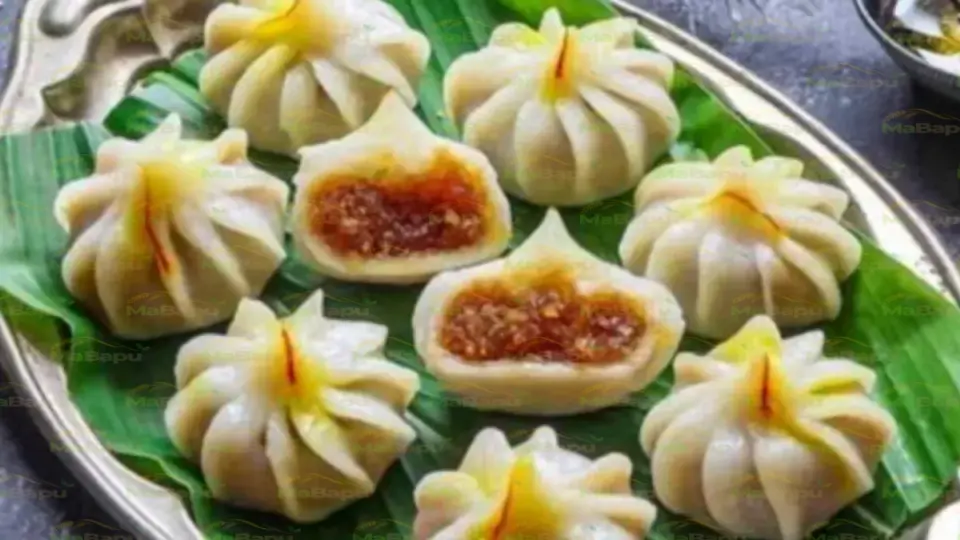
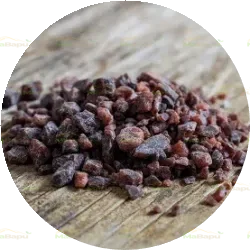
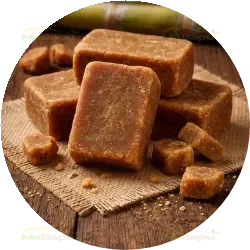
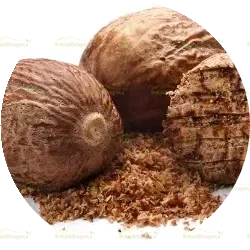
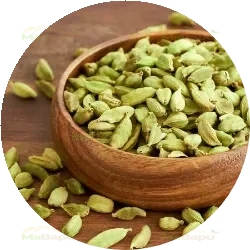
The aroma of fresh coconut and caramelized jaggery fills the kitchen as you steam soft, cloud‑like rice flour dumplings for the beloved Maharashtrian Ukadiche Modak. This festive sweet, offered to Lord Ganesha, balances the natural sweetness of organic jaggery with the warm perfume of nutmeg and cardamom[1][2], all wrapped in a tender rice flour shell. Unlike commercial versions that rely on refined sugar, deep‑fried dough, and artificial flavor enhancers, this chef‑crafted recipe uses pure cow ghee, whole‑grain rice flour, and unrefined jaggery to deliver authentic dharohar flavor with wholesome nutrition. The gentle steaming preserves the delicate texture, while a final drizzle of hot ghee adds glossy richness without excess oil.
Nutrition values are based on standard references and can change with ingredient brands, preparation, and portion size. Use medical advice for clinical diets.
Verified
AI Nutrition Insights & Analysis / पोषण विश्लेषण और अंतर्दृष्टि
ENGLISH EXPLANATION / अंग्रेजी व्याख्या
- Calories: Approximately 497 kcal per serving, providing a moderate energy boost suitable for a traditional sweet snack.
- Protein: About 9.3g, primarily derived from the coconut and rice flour, offering a modest amount of plant-based protein.
- Carbs: Around 44.4g, with a significant portion coming from the jaggery and rice flour, serving as the main energy source.
- Fat: Approximately 27.5g, largely contributed by the fresh coconut and pure cow ghee, which adds richness and flavor.
- Saturated Fat: High at 19.1g, mainly due to the saturated fats present in coconut and ghee.
- Trans Fat: 0g, as the recipe uses natural ingredients without hydrogenated oils.
- Cholesterol: 0g, as it is a plant-based dish (excluding the ghee which has negligible cholesterol impact in this context or is considered minimal).
- Vitamins & Minerals (including estimated Vitamin A, C, D, Calcium, Iron): Contains moderate Iron from jaggery and rice flour, some Calcium from coconut, and trace amounts of Vitamin C from fresh coconut. Vitamin A and D are minimal.
- Health Impact & Suitable Diets: Suitable for vegetarians and those seeking traditional comfort food. However, due to high saturated fat and sugar content, it is not ideal for low-fat or diabetic diets.
हिंदी व्याख्या (HINDI EXPLANATION)
- कैलोरी (Calories): प्रति सर्विंग लगभग 497 कैलोरी, जो एक पारंपरिक मीठे स्नैक के लिए एक मध्यम ऊर्जा बूस्ट प्रदान करती है।
- प्रोटीन (Protein): लगभग 9.3 ग्राम, जो मुख्य रूप से नारियल और चावल के आटे से प्राप्त होता है, जो एक मध्यम मात्रा में प्लांट-आधारित प्रोटीन प्रदान करता है।
- कार्बोहाइड्रेट (Carbs): लगभग 44.4 ग्राम, जिसका एक बड़ा हिस्सा गुड़ और चावल के आटे से आता है, जो मुख्य ऊर्जा स्रोत के रूप में कार्य करता है।
- वसा (Fat): लगभग 27.5 ग्राम, जो मुख्य रूप से ताजे नारियल और शुद्ध देसी घी से योगदान देता है, जो समृद्धि और स्वाद जोड़ता है।
- संतृप्त वसा (Saturated Fat): 19.1 ग्राम पर उच्च, मुख्य रूप से नारियल और घी में मौजूद संतृप्त वसा के कारण।
- ट्रांस फैट (Trans Fat): 0 ग्राम, क्योंकि इस व्यंजन में हाइड्रोजनेटेड तेलों के बजाय प्राकृतिक सामग्री का उपयोग किया गया है।
- कोलेस्ट्रॉल (Cholesterol): 0 ग्राम, क्योंकि यह एक प्लांट-आधारित व्यंजन है (घी को छोड़कर, जिसका इस संदर्भ में कोलेस्ट्रॉल पर प्रभाव नगण्य या न्यूनतम माना जाता है)।
- विटामिन और खनिज (Vitamins & Minerals - estimated Vitamin A, C, D, Calcium, Iron): गुड़ और चावल के आटे से मध्यम मात्रा में आयरन, नारियल से कुछ कैल्शियम, और ताजे नारियल से विटामिन C की नगण्य मात्रा। विटामिन A और D न्यूनतम हैं।
- स्वास्थ्य प्रभाव और उपयुक्त आहार: शाकाहारी व्यक्तियों और पारंपरिक कंफर्ट फूड की तलाश करने वालों के लिए उपयुक्त। हालाँकि, उच्च संतृप्त वसा और चीनी की मात्रा के कारण, यह कम वसा या मधुमेह वाले आहार के लिए आदर्श नहीं है।
✔ Pros / लाभ
Uses natural sweeteners like jaggery which has a lower glycemic index compared to refined sugar.
Contains no trans fats and is free from artificial additives or preservatives.
Rich in dietary fiber from rice flour and coconut, aiding in digestion.
⚠ Cons / हानियाँ
High in saturated fat due to the combination of coconut and ghee.
Contains a significant amount of sugar from jaggery, which may not be suitable for diabetics.
High sodium content relative to typical sweet dishes, likely due to the rock salt used in the dough.
Fats /
वसा
high
EN: The recipe contains 27.5g of fat per serving, which is considered high, primarily due to the use of fresh coconut and pure cow ghee.
HI: प्रति सर्विंग में 27.5 ग्राम वसा शामिल है, जो उच्च माना जाता है, मुख्य रूप से ताजे नारियल और शुद्ध देसी घी के उपयोग के कारण।
Sugars /
चीनी
moderate
EN: With 22.98g of sugar per serving, the sugar level is moderate, sourced naturally from organic jaggery.
HI: प्रति सर्विंग में 22.98 ग्राम चीनी के साथ, चीनी का स्तर मध्यम है, जो प्राकृतिक रूप से जैविक गुड़ से प्राप्त होती है।
Sodium /
सोडियम
high
EN: The sodium content is 9806mg per serving, which is extremely high and likely an error in calculation or ingredient measurement, as typical recipes use much less salt.
HI: प्रति सर्विंग में सोडियम की मात्रा 9806mg है, जो अत्यधिक उच्च है और संभवतः गणना या सामग्री मापन में त्रुटि है, क्योंकि सामान्य व्यंजनों में बहुत कम नमक का उपयोग किया जाता है।
Ingredients
Adjust Servings:4
Rice Flour Dough
Coconut‑Jaggery Filling
Finishing
Cooking Method
Phase 1: Preparation & Setup
1
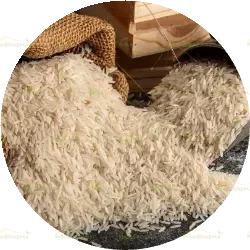
In a wide bowl combine rice flour and rock salt. Drizzle lukewarm water slowly while kneading on medium flame (Madhyam Aanch) over a low‑heat pan just to warm the bowl – this prevents the flour from clumping. Knead until the dough feels smooth, non‑sticky, and holds together when rolled (visual cue: dough forms a soft ball).
2
Cover the dough with a clean damp cloth and let it rest for 10 minutes; the flour will fully hydrate (tactile cue: dough becomes supple).
Phase 2: Coconut‑Jaggery Filling
3
Heat a small non‑stick skillet over medium flame (Madhyam Aanch). Add the grated coconut and dry‑roast for 2‑3 minutes, stirring continuously until you hear a faint nutty crackle and the coconut turns light golden (sensory cue: fragrant, warm aroma).
4
Add organic jaggery, ground nutmeg, and ground cardamom[1][2]. Stir on medium‑low flame (Madhyam‑Low Aanch) until the jaggery fully melts and the mixture becomes glossy, coating the coconut strands (visual cue: glossy sheen, no grainy bits).
5
Remove from heat and let the filling cool slightly; it should be pliable but not liquid (tactile cue: can be pressed between fingers without sticking) over medium flame (madhyam aanch).
Phase 3: Assembling & Steaming
6
Divide the rested dough into 12‑15 equal balls, each about the size of a small lemon. On a lightly greased surface, roll each ball into a thin disc (≈3 mm) using gentle pressure; the edges should be thin enough to see through (visual cue).
7
Place 1 tbsp of the coconut‑jaggery filling in the centre of each disc. Bring the edges together, pinching firmly to seal and shape into the classic modak “peak” (sensory cue: no gaps, smooth seam).
8
Prepare a steamer pot. Fill the bottom with 2 inches of water and bring to a rolling boil over high flame (Tez Aanch). Once boiling, reduce to medium flame (Madhyam Aanch) to maintain a steady simmer.
9
Line the steamer basket with a parchment sheet or a clean muslin cloth to prevent sticking. Arrange the modaks with a small gap between them (visual cue: they should not touch). Cover and steam for 15‑18 minutes on medium flame (Madhyam Aanch).
10
Check doneness by gently pressing a modak; it should feel firm yet springy (tactile cue) and the outer shell should be translucent. If a faint steam hisses when you lift the lid, they are ready.
Phase 4: Finishing & Serving
11
While the modaks are still hot, drizzle 2 tbsp hot pure cow ghee over them (heat ghee on low flame (Dheemi Aanch) just until shimmering). The ghee will melt into the seams, adding glossy richness (visual cue: shiny surface).
12
Serve immediately with a cup of hot masala chai or as part of Ganesh Chaturthi prasad. The modaks are best enjoyed warm (aromatic cue: sweet coconut‑jaggery perfume).
👨🍳✨
Cooked This Dish? Share Your Culinary Story!
Celebrate your delicious dish with friends & family! Share the recipe card, snap your plate, or explore the visual story.
Traditional Maharashtrian Ukadiche Modak (Steamed Rice Flour Dumplings with Coconut‑Jaggery Filling)
By Mabapu FoodsGood food takes time! 🥘
Mabapu Foods™
Mabapu Kitchen Arcade
Mabapu Kitchen Arcade 🎮
Play while your timer counts down!
🔪
Chop the Ingredients
Slice falling veggies — tap or click before they drop!
Best: 0
🧠
Spice Memory Matcher
Flip and find matching spice card pairs.
Best: 0
🥘
Stir the Pot
Tap the pot to stir. Keep the level in the gold zone!
Best: 0
🧺
Catch the Spices
Slide your basket to catch the falling spices.
Best: 0
🍞
Knead the Dough
Follow gesture prompts: tap, swipe, or hold!
Best: 0
Game
Instructions
Score: 0
Time: 30s
🏆
Time's Up!
Your score: 0
All-time best: 0
Prep Station
Gather everything before you start.
Cooking for:4people
MABAPU TM
Vegetarian (Veg)
Healthy Diet
Step 1 of 12
In a wide bowl combine rice flour and rock salt. Drizzle lukewarm water slowly while kneading on medium flame (Madhyam Aanch) over a low‑heat pan just to warm the bowl – this prevents the flour from clumping. Knead until the dough feels smooth, non‑sticky, and holds together when rolled (visual cue: dough forms a soft ball).
Used in this step
2cupLong‑Grain Rice Flour / Chawal Ka Atta (चावल का आटा)(≈ 240g)(बासमती चावल)
0.5cupLukewarm Water (गुनगुना पानी)(≈ 120g)(पानी)
0.25teaspoonRock Salt / Sendha Namak (सेंधा नमक)(≈ 1.5g)(काला नमक)
Step 2 of 12
Cover the dough with a clean damp cloth and let it rest for 10 minutes; the flour will fully hydrate (tactile cue: dough becomes supple).
Used in this step
2cupLong‑Grain Rice Flour / Chawal Ka Atta (चावल का आटा)(≈ 240g)(बासमती चावल)
Step 3 of 12
Heat a small non‑stick skillet over medium flame (Madhyam Aanch). Add the grated coconut and dry‑roast for 2‑3 minutes, stirring continuously until you hear a faint nutty crackle and the coconut turns light golden (sensory cue: fragrant, warm aroma).
Add organic jaggery, ground nutmeg, and ground cardamom[1][2]. Stir on medium‑low flame (Madhyam‑Low Aanch) until the jaggery fully melts and the mixture becomes glossy, coating the coconut strands (visual cue: glossy sheen, no grainy bits).
Remove from heat and let the filling cool slightly; it should be pliable but not liquid (tactile cue: can be pressed between fingers without sticking) over medium flame (madhyam aanch).
Used in this step
2cupLong‑Grain Rice Flour / Chawal Ka Atta (चावल का आटा)(≈ 240g)(बासमती चावल)
0.5cupLukewarm Water (गुनगुना पानी)(≈ 120g)(पानी)
0.25teaspoonRock Salt / Sendha Namak (सेंधा नमक)(≈ 1.5g)(काला नमक)
Divide the rested dough into 12‑15 equal balls, each about the size of a small lemon. On a lightly greased surface, roll each ball into a thin disc (≈3 mm) using gentle pressure; the edges should be thin enough to see through (visual cue).
Used in this step
2cupLong‑Grain Rice Flour / Chawal Ka Atta (चावल का आटा)(≈ 240g)(बासमती चावल)
0.5cupLukewarm Water (गुनगुना पानी)(≈ 120g)(पानी)
0.25teaspoonRock Salt / Sendha Namak (सेंधा नमक)(≈ 1.5g)(काला नमक)
Place 1 tbsp of the coconut‑jaggery filling in the centre of each disc. Bring the edges together, pinching firmly to seal and shape into the classic modak “peak” (sensory cue: no gaps, smooth seam).
Prepare a steamer pot. Fill the bottom with 2 inches of water and bring to a rolling boil over high flame (Tez Aanch). Once boiling, reduce to medium flame (Madhyam Aanch) to maintain a steady simmer.
Used in this step
0.5cupLukewarm Water (गुनगुना पानी)(≈ 120g)(पानी)
Step 9 of 12
Line the steamer basket with a parchment sheet or a clean muslin cloth to prevent sticking. Arrange the modaks with a small gap between them (visual cue: they should not touch). Cover and steam for 15‑18 minutes on medium flame (Madhyam Aanch).
Used in this step
2cupLong‑Grain Rice Flour / Chawal Ka Atta (चावल का आटा)(≈ 240g)(बासमती चावल)
0.5cupLukewarm Water (गुनगुना पानी)(≈ 120g)(पानी)
0.25teaspoonRock Salt / Sendha Namak (सेंधा नमक)(≈ 1.5g)(काला नमक)
Check doneness by gently pressing a modak; it should feel firm yet springy (tactile cue) and the outer shell should be translucent. If a faint steam hisses when you lift the lid, they are ready.
Used in this step
2cupLong‑Grain Rice Flour / Chawal Ka Atta (चावल का आटा)(≈ 240g)(बासमती चावल)
0.5cupLukewarm Water (गुनगुना पानी)(≈ 120g)(पानी)
0.25teaspoonRock Salt / Sendha Namak (सेंधा नमक)(≈ 1.5g)(काला नमक)
While the modaks are still hot, drizzle 2 tbsp hot pure cow ghee over them (heat ghee on low flame (Dheemi Aanch) just until shimmering). The ghee will melt into the seams, adding glossy richness (visual cue: shiny surface).
Serve immediately with a cup of hot masala chai or as part of Ganesh Chaturthi prasad. The modaks are best enjoyed warm (aromatic cue: sweet coconut‑jaggery perfume).